
← Case studies · Supply Chain
Eyes on the driver for the whole trip
Fleet safety: eyes on the driver for the whole trip
- Industry
- Supply Chain
- Site
- Trucking fleets, transporters and logistics companies
It is 3 am on the highway. The driver has been at the wheel since evening. Their eyes close for two seconds, then three.
Most fleets only find out about a moment like that after the accident, if at all. The truck has a GPS dot on a map. It tells you where the truck is. It does not tell you how the person driving it is doing.
Where it goes wrong today
- Long night drives, tight delivery times and not enough rest stops.
- Phones in hand while driving, and nobody sees it.
- You cannot be sure who is actually driving the truck.
- After an incident there is no video, only the driver's word.
- The fleet team watches dots on a map, not drivers.
What we set up
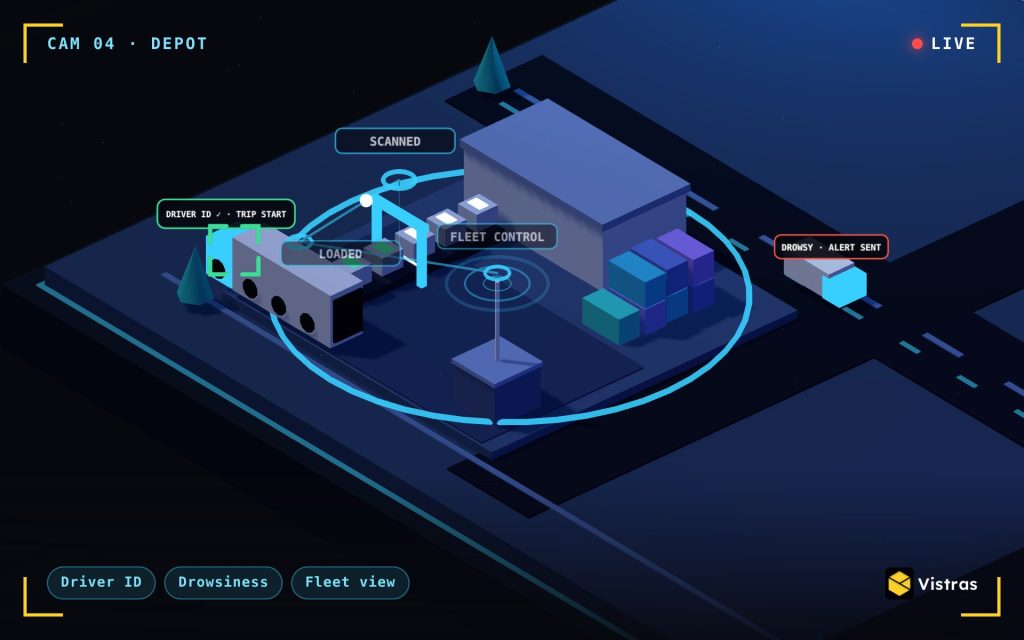
We fit a smart camera in each cab, facing the driver, and another facing the road if you want one. The AI runs on the camera itself. It recognises the driver when the trip starts, then watches for signs of drowsiness, looking away from the road, phone use and a missing seatbelt.
When it sees one, the driver gets an alarm in the cab straight away. The fleet team gets the alert with a short clip, so they can call the driver and decide what to do: a break, a swap, or just a check. Every trip ends with a driver score.
What changes
- A drowsy driver gets woken up in the cab, not found after the crash.
- The fleet team sees how drivers are doing, not just where trucks are.
- You know who drove which truck on which trip.
- Coaching is based on clips, so drivers can see what happened.
- When something does happen, you have the video.
How we start
- We walk the site with you and look at the cameras you already have.
- We pick the two or three problems that cost you the most.
- We run a pilot on one line, kitchen, building or route, with the numbers written down before we start.
- If the numbers move, we roll out to the rest.
What we track with you
Before the pilot starts, we write down where these numbers stand today. Then we report against them every month.
- Drowsiness and distraction alerts per 1,000 km
- Phone use and seatbelt events per driver
- Harsh braking and near misses
- Accidents and insurance claims
- Driver scores, month on month