
← Case studies · Hotels & Hospitals
Hundreds of cameras, one screen
Hotels and hospitals: one control room for every building
- Industry
- Hotels & Hospitals
- Site
- Hotels, hospitals and multi-building campuses
A large hospital can have a few hundred cameras across wards, car parks, pharmacy stores and service corridors. Two guards cannot watch a few hundred screens.
So in practice, footage gets opened after an incident, not during it.
Where it goes wrong today
- Each building has its own recorder and its own login.
- Guards watch a wall of screens for hours and still miss things.
- Pharmacy, ICU and server room doors open with cards that get shared.
- Finding the right clip after a complaint takes half a day.
What we set up
We bring every camera from every building into one central view, using the recorders and cameras you already have.
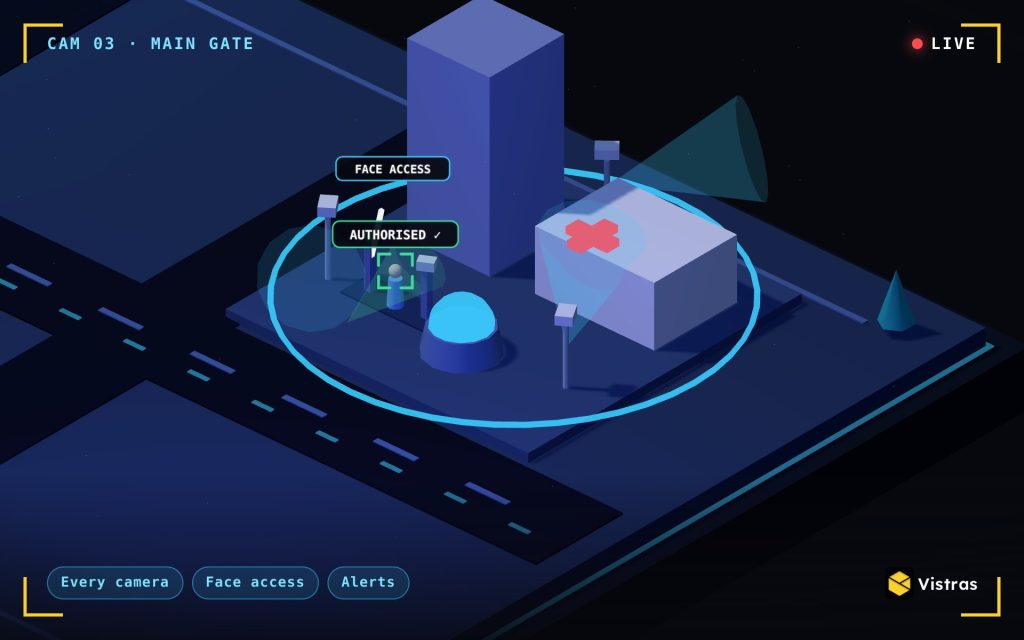
Instead of asking people to watch, the system raises events: someone in a restricted area, a crowd building up at an entrance, a camera that has gone offline. At sensitive doors, face recognition lets staff in and flags anyone it does not know.
What changes
- The control room is told where to look, while it is happening.
- Access to staff-only areas is tied to the person, not a card.
- Complaints and insurance claims get answered with the clip, in minutes.
- Faces in public areas can be blurred, and footage is only open to the roles that need it.
- Every property in the group runs to the same playbook.
How we start
- We walk the site with you and look at the cameras you already have.
- We pick the two or three problems that cost you the most.
- We run a pilot on one line, kitchen, building or route, with the numbers written down before we start.
- If the numbers move, we roll out to the rest.
What we track with you
Before the pilot starts, we write down where these numbers stand today. Then we report against them every month.
- Time from an event to a guard responding
- Time to find footage for an incident
- Attempts to enter sensitive areas without access
- Cameras offline, and how fast they come back
- Hours spent watching screens versus responding