
← Case studies · Thermal & Fire Detection
Catch the heat before the smoke
Early fire detection: catch the heat before the smoke
- Industry
- Thermal & Fire Detection
- Site
- Plants, warehouses, storage yards and electrical rooms
Most industrial fires start as heat. An overloaded panel. A belt slipping on a roller. A stockpile warming up overnight. A battery cell going bad.
A smoke detector only reacts once something is already burning. In a dusty plant, or a warehouse with a very high roof, it often reacts late. Or it goes off for no reason, and people learn to ignore it.
Where it goes wrong today
- Electrical rooms get a thermal check a few times a year, with a handheld camera.
- Nobody watches the stockpile at 3 am.
- Dust and steam set off smoke detectors, so people stop trusting them.
- Battery rooms are growing faster than anyone's checklist.
What we set up
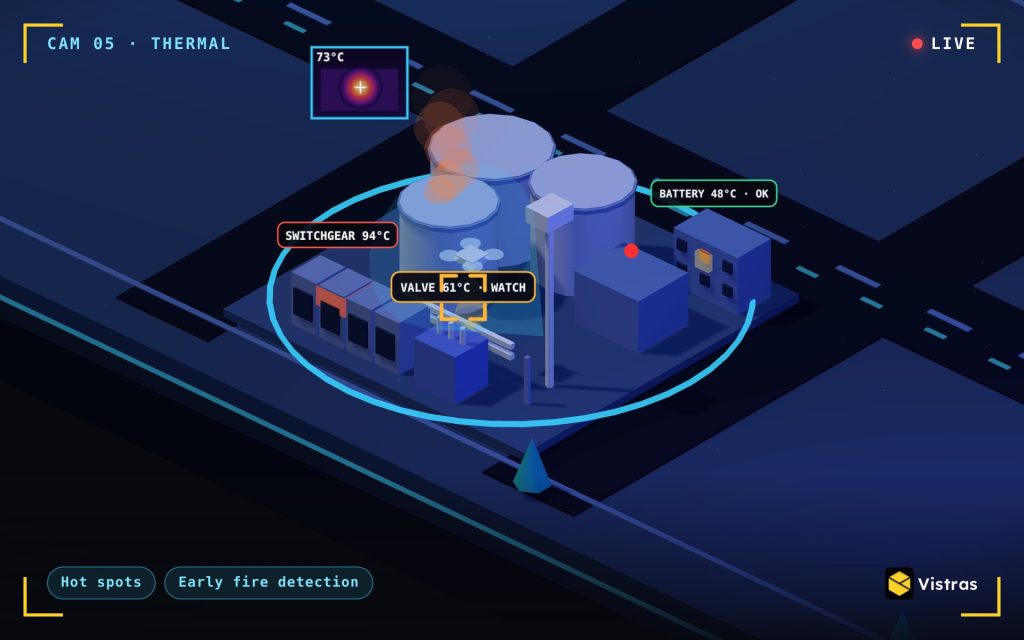
We put fixed thermal cameras on the things that tend to catch fire: panels, motors, conveyors, stockpiles, battery racks. Each area gets its own limits, so a slow climb gets caught as well as a sudden spike.
Alerts go to the control room and to phones with two pictures, thermal and normal, so whoever gets one can tell in a second whether it is real. If you want, it can also trigger your fire panel, sirens or suppression.
What changes
- You get a warning while it is still heat, with time to act.
- Alerts come with a picture, so people trust them again.
- The same cameras show which panels and motors are running hot.
- Nights, weekends and empty buildings are covered like the day shift.
- Every alert and reading is on record for your insurer.
How we start
- We walk the site with you and look at the cameras you already have.
- We pick the two or three problems that cost you the most.
- We run a pilot on one line, kitchen, building or route, with the numbers written down before we start.
- If the numbers move, we roll out to the rest.
What we track with you
Before the pilot starts, we write down where these numbers stand today. Then we report against them every month.
- Hot-spot alerts, and how early they came
- False alarms, before and after
- Equipment faults found from heat trends
- Time from alert to action
- Handheld thermography rounds you no longer need